Most booked
Cheese, vodka and pools
Chocholow tasting
- Length11 hours
- Tasting30 minutes
- AlsoFunicular, baths
Interactive to-do list
Zakopane day: funicular, tasting, thermal pools
★ 4.8 · 10,563 written reviews
The short version
A Zakopane cheese and vodka tour stops in the highland village of Chocholow for a short tasting of local spirits, smoked oscypek cheese and regional food.
Know before you taste
List of 9 items
Tick off each point as you complete it. This device keeps your progress.
0 / 9 ready
All ticked. Only your date and the number of travelers are left to pick.
Book a spotA Zakopane cheese and vodka tour stops in Chocholow for a tasting of smoked sheep's cheese and local spirits. Here is what you taste, how to tell real oscypek, and the village behind it.
Editorial team, zakopane-tour.com · Updated November 9, 2026 · 7 mins to read
The cheese and vodka part of a Zakopane day is a short, sociable stop rather than a tour of its own. On the site's tour it comes after about 1.5 hours on the coach from Krakow: first a 20-minute stroll through a traditional village, then 30 minutes in Chocholow with spirits, cheese tasting and regional food. The whole day lasts 11 hours and also covers Krupowki, the Gubalowka funicular and the thermal baths.
If you search for a Zakopane cheese tour on its own, you will mostly find the same pattern: the tasting is folded into a bigger day. One 9-hour itinerary adds a separate 30-minute stop at a cheese factory with cheese tasting, after Chocholow. Another day of 11 hours bills itself as cheese and vodka with hot springs, led in English, Polish or Spanish. The listings name the spirits only in general terms, so expect a local selection rather than a set menu.
The people behind the food are the Gorale, the highlanders of Podhale. Tatra National Park describes their culture as arising from centuries of pastoral tradition and a struggle for survival on rocky ground.6 The Polish Tourism Organisation names Zakopane's wooden architecture, its folklore and the smoked cheese oscypek among the reasons to visit.7 The tasting is a small window into that world, best enjoyed with questions for your guide.
Know your cheese
| Cheese | What it is | Protection |
|---|---|---|
| Oscypek | Smoked spindle of sheep's milk | EU PDO |
| Bryndza podhalanska | Soft salty sheep's cheese | EU PDO |
| Redykolka | Small smoked shaped cheese | EU PDO |
| Bundz | Fresh young cheese | Sold at the market |
Protection as the Ministry of Agriculture lists it; oscypek rules from the quality inspection office.16,1,17
Oscypek is a smoked, spindle-shaped cheese that shepherds in the Tatras and Podhale have made by hand for more than 500 years, according to the agricultural quality inspection office in Krakow.11 It was registered as an EU Protected Designation of Origin on 14 February 2008.1 That status means the name belongs to cheese made by the traditional method in a defined area, not to any smoked cheese shaped like it.
The rules are precise. Oscypek must use at least 60% sheep's milk from the Polish Mountain Sheep breed, with any cow's milk coming only from Polish Red cows.2 It is formed and salted by hand and then smoked in coniferous wood smoke.12 It may be made only in a defined area of the Malopolska and Silesian regions: the Tatras, Podhale and part of the Beskids.13
The calendar matters too. Genuine oscypek is made in the grazing season, from May to September.3 That is when the flocks are on the high pastures and the shepherds' huts are working. Outside those months, the cheese sold as oscypek on street stalls deserves a second look, which is where the next section comes in.
The inspection office gives a simple checklist. Real oscypek has a spindle shape and a light brown, slightly glossy rind, and it should not be overly soft or rubbery.19 Look for the PDO marking, ChNP in Polish, on the pack or in the seller's documents.20 The Agricultural and Food Quality Inspection checks PDO labels on the market, including labels, points of sale and product quality.21
On Krupowki and around the funicular, many stalls sell smoked cheeses that look similar, often grilled and served with cranberry jam. They can taste good, but only a labelled product made in season is oscypek in the protected sense. Ask the seller where and when it was made, and do not be shy about checking the label. A good seller will happily tell you about the hut and the flock.
A regional open-air market at the foot of Gubalowka sells oscypek, bundz, redykolka and other specialities, alongside folk crafts.17 It is a convenient place to compare shapes, sizes and prices in one walk. Buy a whole cheese to take home if you have a cool bag, or a few grilled slices to eat on the spot, and keep the receipt if you want to ask about the label later.
Plan your tasting
Choose by how deep you want to go.
If I want a taste in a bigger day
The site's tour
30 minutes in Chocholow, then town and pools.
If I want more cheese
Add a cheese factory
One itinerary stops 30 minutes at a cheese factory.
If I want to buy cheese to take home
The market below Gubalowka
Oscypek, bundz and redykolka in one place.17
If I travel with teenagers
Cheese, not spirits
Polish rules forbid serving alcohol to under-18s.4
If I want the history
The Chocholow museum
Taste it on a tour
Most booked
Chocholow tasting
More cheese
Plus a cheese factory
Hot springs too
Guide in three languages
Oscypek has two protected relatives. Poland's Ministry of Agriculture lists bryndza podhalanska, oscypek and redykolka among the Polish Protected Designations of Origin.16 Bryndza is a soft, salty sheep's cheese often spread on bread or mixed with potatoes, and redykolka is a small smoked cheese pressed into decorative shapes, often animals or hearts. Bundz, a fresh young cheese, is sold at the same stalls.17
The highland dairy tradition is still alive in the hills. The City of Zakopane says a cultural sheep-grazing programme lets visitors taste real oscypek and drink zentyca, sheep milk whey.22 Whey once had a place in medicine here too: Zakopane's sanatoria used treatment with the whey of ewe's milk.23 Try a cup if you see it offered at a shepherd's hut on a valley walk; it is sour, light and very different from anything in a supermarket.
For a closer look at how the cheese is made, the Polish Tourism Organisation points to the Oscypek Museum, where you can talk to a baca, the head shepherd, and make your own oscypek.24 It is a good add-on for children, who usually remember the cheese moulds better than any viewpoint. Combine it with the market below Gubalowka for a highland food afternoon.
Price your tasting day
Pick your tasting day and the number of guests.
Weigh up 4 options
Pick your tasting day and the number of guests.
≈
View≈
View≈
View≈
ViewStarting prices from GetYourGuide, converted at the ECB reference rate. You will see the exact price when booking.
Cheese and village
1592
A royal privilege names the village.5
21 February 1846
Insurgents attack the frontier guard post.8
4 August 1935
Carpathian highlanders gather under the Tatras.9
1978
In Jan Bafia's log cottage.10
14 February 2008
Registered as an EU PDO.1
May to September
When genuine oscypek is made.3
The vodka part of the stop is a tasting, not a session. The listing names spirits alongside the cheese and regional food in its 30-minute Chocholow stop. Polish rules forbid selling or offering alcohol to anyone younger than 18, so younger travellers skip that part.4 Drinking in public places is prohibited except in licensed venues such as bars, restaurants and cafe gardens, so keep any bottle you buy closed until you are somewhere licensed or at home.25
If you are searching for a vodka tour in Zakopane, treat the tasting as the cultural side of the day. Take small sips, eat the cheese and bread offered with it, and ask what each bottle is made from. Remember the rest of the day: on the site's tour the next stops are a funicular ride and 3 hours in thermal pools, where alcohol and hot water are a poor mix.
If you would like to take a bottle home, check your airline's rules and the allowances for your destination before you buy. Pack it in checked luggage if it holds more liquid than your cabin allowance. And if spirits are not your thing, say so: the cheese, bread and regional food make the stop worth it on their own.
Video
Great Big Story on YouTube · The video stays unloaded until you press play.
one can find here plenty of traces of the unique culture of the Podhale highlanders (górale), which arose from the centuries-old pastoral tradition and the struggle for survival on the rocky ground
Chocholow is the village where most tours stop. It is first recorded in a 1592 privilege of King Sigismund III Vasa.5 Its fame comes from the Chocholow Uprising of 1846, a brief armed revolt against Austrian rule at the time of the Cracow revolution.26 On the evening of 21 February 1846 insurgents attacked the Austrian frontier guard post in the village.8 On the evening of 22 February about 500 peasants from nearby villages gathered there before the rising was put down.27
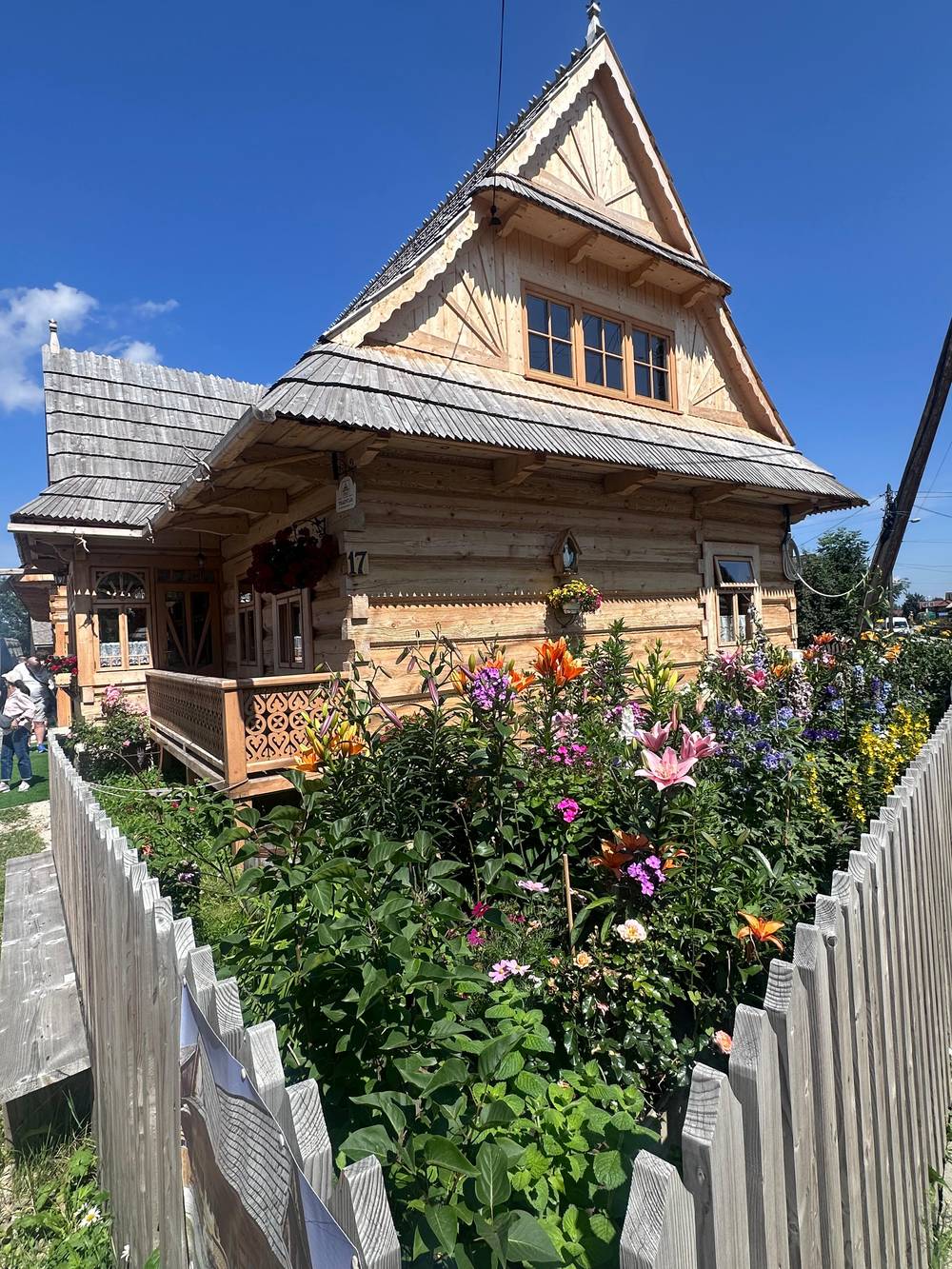
The story is told in the Museum of the Chocholow Uprising, which opened in 1978 in the old cottage of the farmer Jan Bafia.10 Its walls are split logs, halved along their length and interlocked at the corners, and inside are a vestibule, a black chamber, a white chamber, a bedchamber and an attic store.28 The black chamber held daily family life, while the white chamber, used on festive days, had light walls, decorated furniture and paintings on glass.29
Entry costs PLN 6, or PLN 4.50 reduced, and the museum is free every Sunday.14 It opens Wednesday to Sunday from 10.00 AM to 2.00 PM; Monday and Tuesday are closing days.18 A tour stop is usually too short for the museum, so if the village grabs you, come back on your own. Walk the main street slowly, look at the log walls and the carved gables, and remember that these are homes, so photograph from the street.
The highland culture you taste in Chocholow comes alive at Zakopane's festivals. The International Festival of Highland Folklore traces back to 4 August 1935, when musicians, dancers and folk artists from across the Polish Carpathians gathered under the Tatras.9 Over the past 50 years nearly 600 foreign ensembles and more than 200 Polish groups have taken part, competing for the Golden Ciupaga, a highland axe.30
Children carry the tradition on. The Zlote Kierpce festival of children's highland bands has run since 2010 and opens with a parade on Krupowki.31 Late each summer Koscieliska Street throws its own party, with carriage rides and local competitions for cakes, cordials and the finest highland dress.32
The storytelling tradition is old too. In the 19th century Jan Krzeptowski Sabala led painters and writers through the mountains, and he was a hunter, a fiddler and a teller of tales as well.33 Listen for the fiddles and the high, sharp singing in the restaurants on Krupowki, and look for the embroidered felt trousers and the leather moccasins called kierpce. They are the everyday side of the culture your tasting introduces.
FAQ
On the site's tour the 30-minute Chocholow stop includes all three.
It was registered on 14 February 2008.1
Genuine oscypek is made from May to September.3
Polish rules bar anyone from selling or offering alcohol to under-18s.4
Drinking in public places is prohibited except in licensed venues.25
Sources
Off to the Tatras? Ask a real person here.